

Smart agriculture applications
For agricultural parks and management teams, connect field information with follow-up work by mapping parcels, inspection tasks, and exception records into a digital-platform proposal.
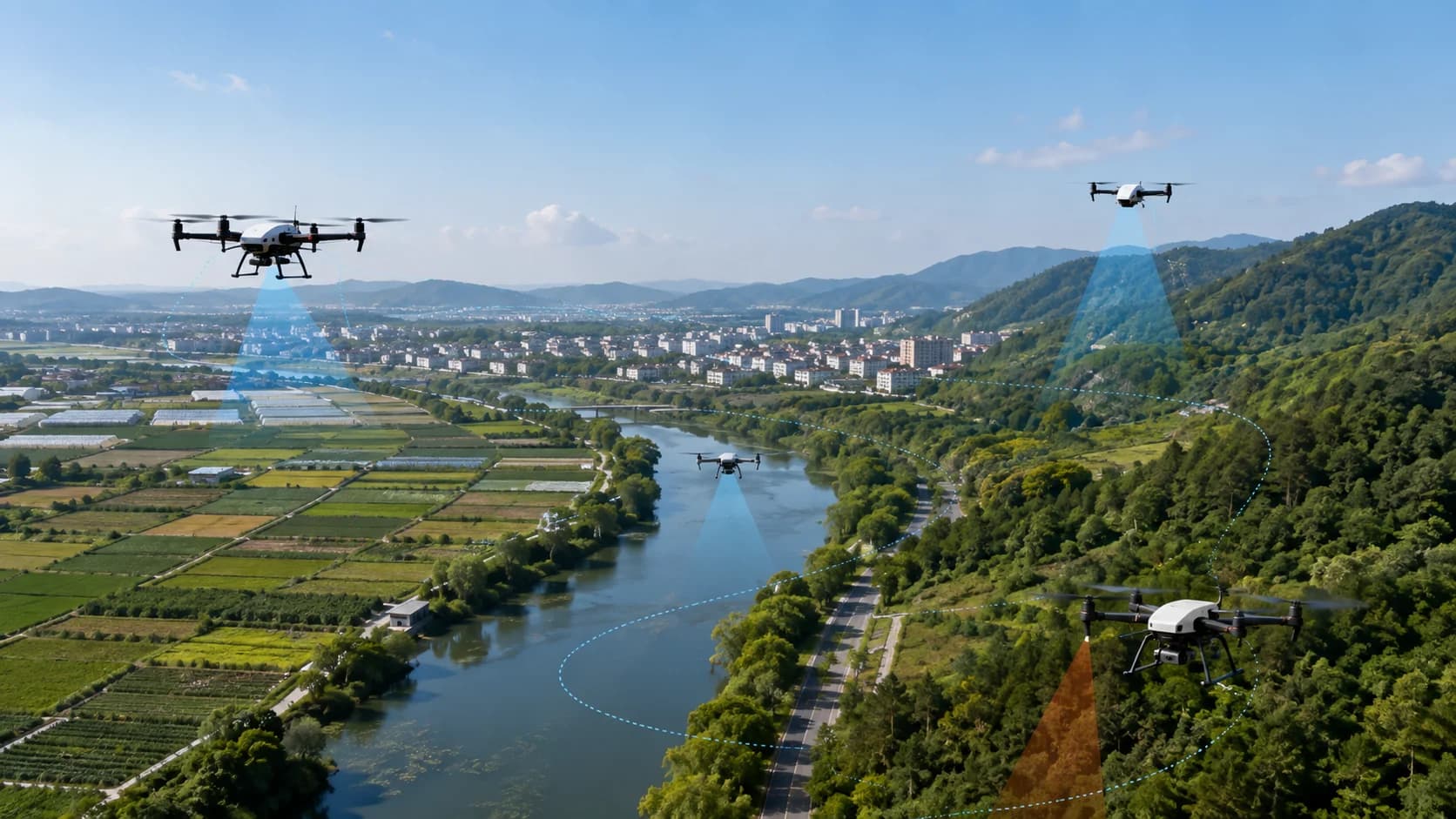
LOW-ALTITUDE APPLICATIONS
Use authorised information and clear responsibilities to support discussions across agriculture, forestry, water, transport, safety, emergency, environment, and urban governance.
Position
Public-service scenarios emphasise data provenance, workflow ownership, and human review, without treating support systems as substitutes for authority or professional conclusions.
Capabilities and work paths
For agricultural parks and management teams, connect field information with follow-up work by mapping parcels, inspection tasks, and exception records into a digital-platform proposal.
Organise patrol tasks, observations, and review records by forest compartment or protected zone to create a traceable forestry-protection register.
Organise inspection lists, issue records, and review progress by river section, lake zone, or facility to support a shared water-governance register.
Organise inspection tasks, field materials, and coordination status around roads, bridges, and priority sites for review by transport-infrastructure operators.
Subject to clear authority and role permissions, organise event materials, verification tasks, and coordination records for public-safety digital programmes.
Bring existing plans, resource directories, coordination tasks, and review materials into one information chain for emergency readiness and exercise records.
Organise task requirements, provenance notes, quality comments, and review opinions by observation area and material batch to support environmental information workflows.
Connect inspection tasks, collected materials, responsibility routing, and review records around districts, grids, and matters to support city-operations coordination.
Architecture and delivery path
Choose a clear starting point such as a parcel, forest area, water section, route, event type, material batch, or urban district.
Review provenance, authority, object references, participating roles, and status definitions to identify the platform workflow to configure.
Use redacted examples to check registers, routing, and review records, producing adjustments and conditions for a later implementation stage.
Describe the scenario object, current records, and responsible team so we can define the inputs, workflow, and stage outputs together.